Sealing, bonding and shock absorption are indispensable processes in component manufacturing. Various products require different types of adhesives including single-component silicone, two-component structural adhesive, hot melt adhesive and expandable sealant, which differ greatly in viscosity, mixing ratio and dispensing precision requirements. General-purpose gluing equipment has limited compatibility, while tailor-made non-standard gluing machines feature custom glue feeding, metering and motion systems developed to match specific process specifications. They maintain stable control over full-process gluing parameters, catering to mass gluing production of auto parts, hardware housings and plastic assemblies.
Non-standard gluing equipment consists of four core customized modules developed to match workpiece gluing paths and adhesive properties: glue supply unit, quantitative metering unit, motion execution unit and visual monitoring unit.For high-viscosity drum-packed sealants, a high-pressure plunger pump feeding system is equipped with constant-temperature heating pipelines to stabilize adhesive viscosity, eliminating seasonal temperature interference in workshops and ensuring consistent dispensing flow rates year-round. Two-component structural gluing machines adopt an independent dual-pump metering system to precisely regulate the mixing ratio of Part A and Part B adhesives, with adjustable ratio values on the operation touchscreen. Real-time stirring inside the mixing chamber prevents bonding failure caused by uneven local mixing.
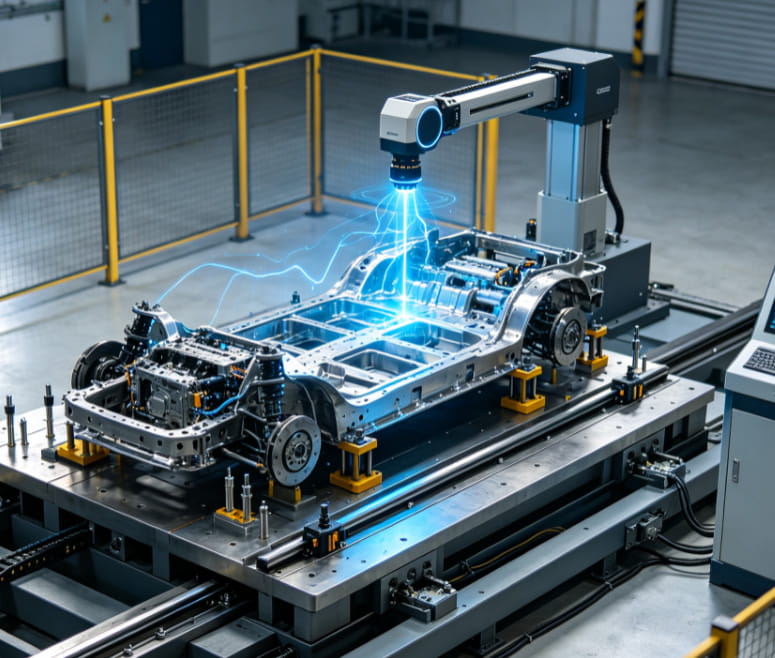
Two motion axis configurations are available: 3-axis linear servo systems and 5-axis linkage robotic modules. The compact, easy-to-commission 3-axis servo travel mechanism is suitable for flat housings and regular-shaped workpieces. The 5-axis linkage module, by contrast, adjusts dispensing gun angles in multiple orientations to achieve full, dead-zone-free gluing on curved automotive body panels and irregular cavity components. The dispensing gun is fitted with self-cleaning and anti-drip valves that automatically cut off adhesive flow during equipment standby, preventing residual glue drips that contaminate workpiece surfaces and cutting manual cleaning labor.
Glue paths, glue layer thickness and glue output per unit length are all saved in dedicated programs. Operators simply call up corresponding preset programs when switching workpiece models without re-commissioning parameters. The built-in closed-loop flow feedback system collects real-time dispensing data and triggers automatic alarms plus equipment shutdown upon faults such as insufficient glue supply, pipeline blockages or abnormal metering pump pressure, while logging fault timestamps and workpiece serial numbers for defective product traceability. On-line visual inspection captures real-time glue path footage to detect cosmetic defects including glue breakage, narrow glue beads and glue overflow, enabling autonomous quality inspection for the gluing process.
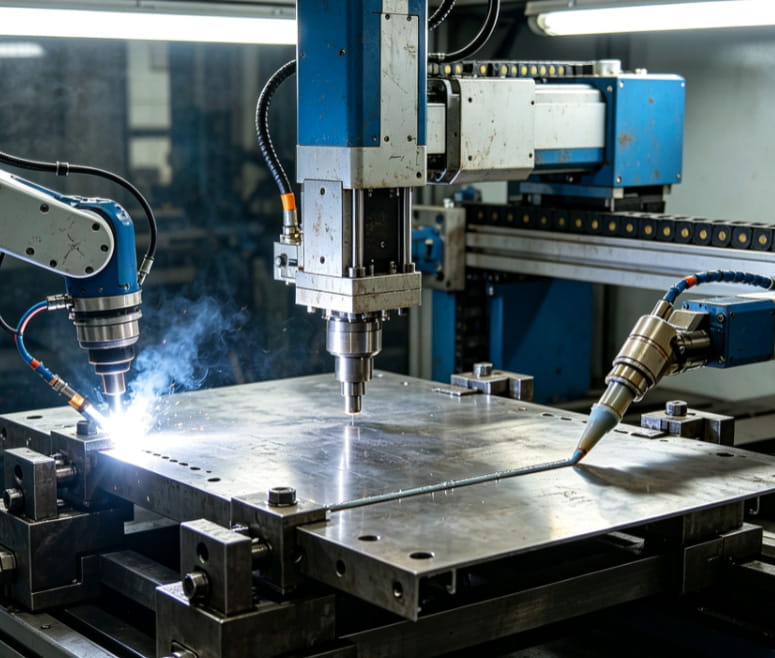
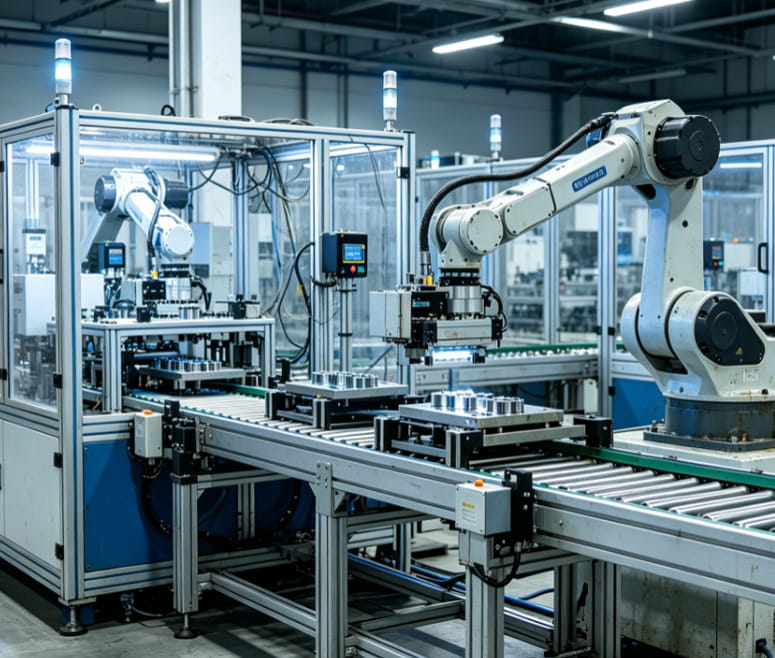
Custom positioning tooling is matched to different workpieces such as automotive lamps, door sheet metal parts, chassis housings and battery casings. A single clamping operation secures the workpiece for automatic full-seam sealing gluing. Some integrated workstations combine punching, welding and gluing processes to eliminate workpiece transfer and positioning deviations from repeated clamping. The electrical system is equipped with multi-layer safety protection; safety light curtains installed at workstations automatically halt gluing operations when operators approach the working zone, mitigating hazards of high-pressure adhesive ejection and mechanical axis collisions.
As performance standards for component sealing grow increasingly stringent, adhesive bonding reliability directly determines product service life. Featuring integrated precision metering, constant-temperature glue control and automatic visual inspection, custom non-standard gluing equipment delivers consistent gluing quality for every workpiece, reducing adhesive waste and defective bonding rates. It is widely deployed in supporting automotive manufacturing, new energy housing production and precision hardware sealing processing.