Against the backdrop of accelerating intelligent transformation across the manufacturing sector, standard general-purpose equipment can no longer accommodate the differentiated production conditions of various industries. Products vary drastically in shape, dimension, machining process and production tact time. Fixed-format standard machines lack versatility, resulting in high costs for production line retrofits and new product launch. Against this backdrop, non-standard automated equipment, boasting core strengths of customization and flexibility, has become a vital solution to optimize production systems in numerous manufacturing sectors including component machining, automotive supporting parts and hardware processing.
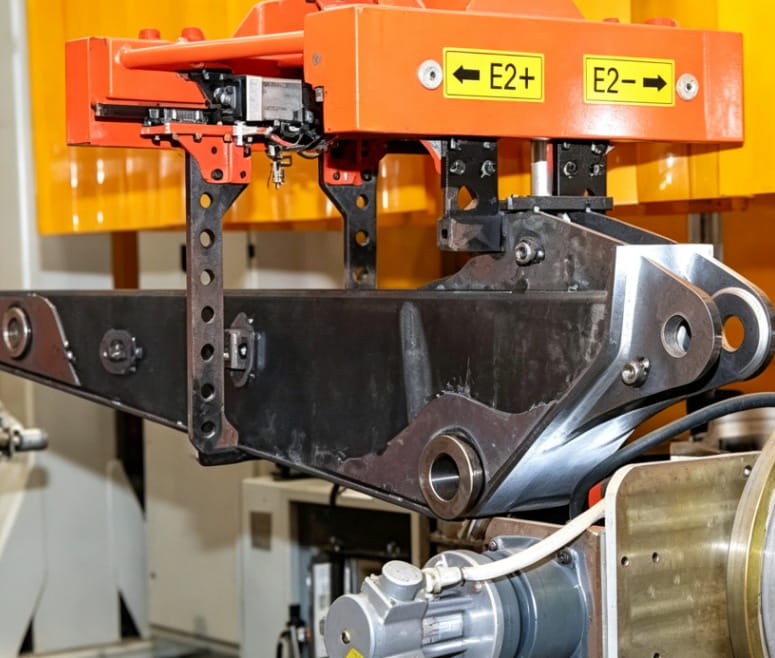
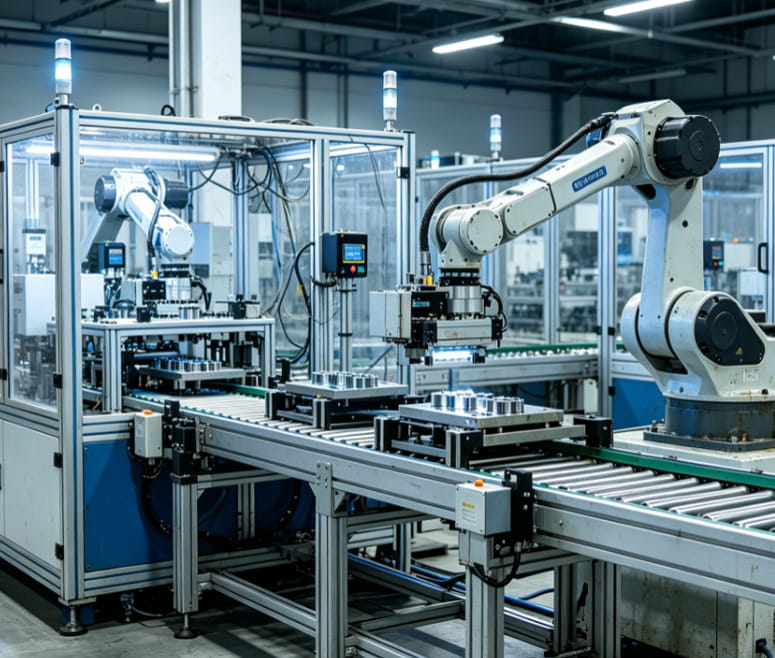
Distinct from mass-produced standard machinery, all non-standard automated equipment is developed with dedicated solutions tailored to clients’ actual production requirements. During the design phase, multiple practical factors are comprehensively evaluated, including product drawings, workshop footprint, existing production line layout, daily output targets and operators’ working habits, without adopting one-size-fits-all templates. The complete machine integrates multiple technical modules such as mechanical transmission structures, servo drive systems, visual recognition units, programmable control systems and sensor inspection assemblies. It can integrate single or multiple consecutive machining processes as required, enabling fully automatic workflow covering workpiece loading, processing, transfer and unloading, and drastically cutting repetitive manual labor.
Flexible production stands out as the most prominent feature of non-standard automated equipment. Catering to the multi-variety, small-batch order model, the machine adopts a modular structure equipped with quickly interchangeable positioning tooling. When switching between workpieces of different specifications, operators only need to adjust program parameters and replace matching fixtures to finish line changeover commissioning within a short period, without large-scale disassembly and reconstruction of the whole machine. Many small and medium-sized manufacturers frequently update their product lines. Custom non-standard equipment can adjust its functions synchronously with product iteration, extending service life and easing the financial burden from frequent purchases of new machinery.
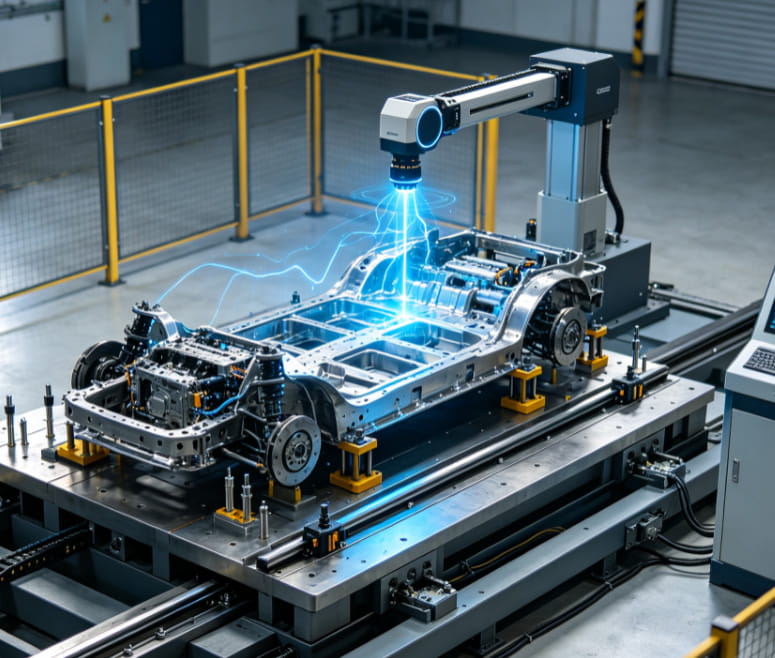
From the perspective of production management, modern non-standard automated equipment can interface with factory digital management systems. It collects real-time data including operating hours, production output, equipment fault early warnings and process pass rates to generate complete production records and achieve full traceability of the entire manufacturing process. Traditional manual assembly lines are prone to inconsistencies in operating force, positioning deviation and missed processes. Automated equipment delivers consistent mechanical movements, unifying machining standards for every single product, reducing dimensional discrepancies caused by human error and stabilizing overall finished product quality.
Furthermore, safety standards for workshop operation are fully factored into equipment design. Protective components such as safety light curtains, emergency stop devices, safety enclosures and automatic anomaly shutdown functions are installed to mitigate workplace hazards from flying workpieces and unintended machine movements, upgrading the overall production environment. The equipment allows optimized manpower allocation during operation: workers are relieved from basic repetitive tasks such as handling, positioning and machining, and shifted to technical roles including equipment commissioning, quality inspection and program maintenance, optimizing the enterprise’s workforce structure.
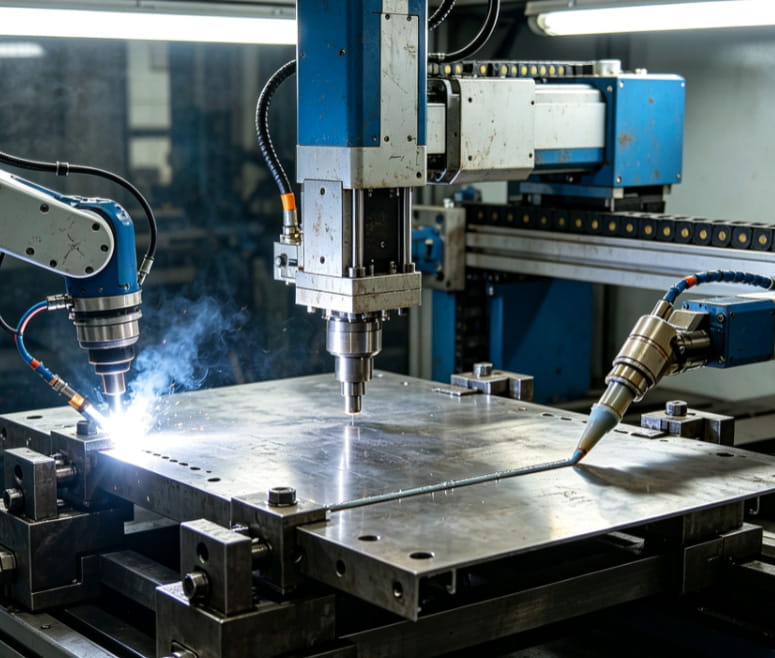
Currently, the application scope of non-standard automated equipment keeps expanding, with wide implementation across automotive components, home appliance hardware, new energy parts, precision plastic components and other industries. Each industry has unique process priorities — some focus on welding, others on assembly, gluing or punching. The equipment can integrate targeted functions to build all-in-one workstations. Driven by the trend of refined manufacturing, the market keeps raising standards for product precision, production efficiency and line adaptability. Non-standard automated machinery with capabilities of custom development, flexible changeover and digital interconnection will remain the mainstream choice for manufacturers upgrading production lines, facilitating the shift from traditional processing modes to intelligent, high-efficiency and stable modern production.