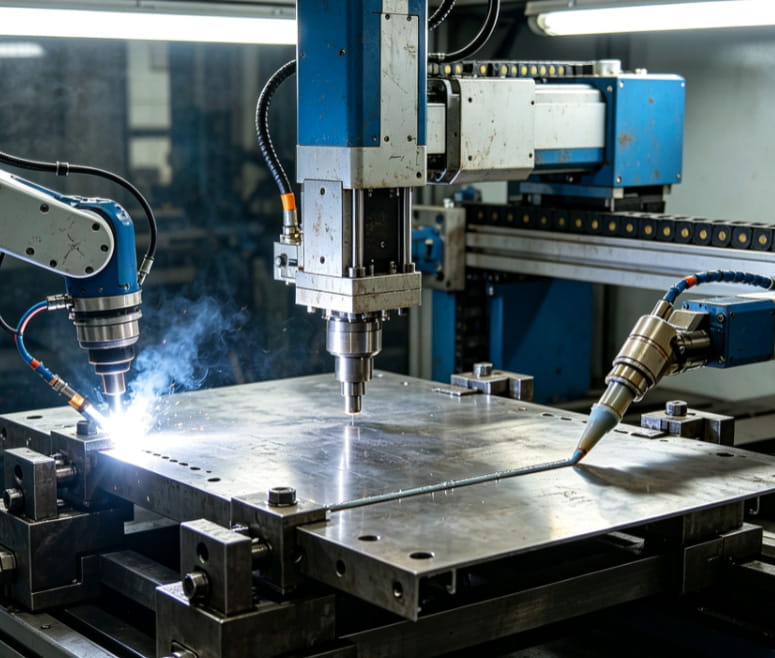
Traditional component machining deploys three standalone machines for separate welding, punching and gluing processes. Each unit requires reserved space for manual operation and workpiece transfer, leading to a large overall footprint. Small and medium-sized factories face limited floor space, making it difficult to add extra machines to expand production capacity. Custom multi-process integrated workstations integrate punching modules, welding units and precision gluing systems into a single machine frame, equipped with automatic loading & transfer mechanisms. All machining procedures are completed in one single workpiece clamping cycle, drastically cutting total equipment footprint, making full use of restricted workshop space and lowering labor costs as well as dimensional deviations caused by repeated workpiece handling.
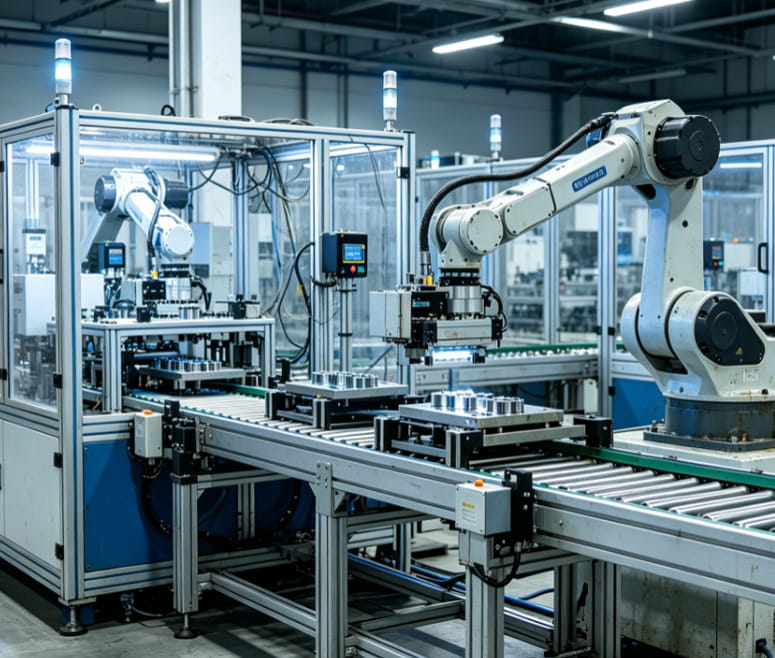
The integrated workstation adopts a compact vertical layered layout: servo punching mechanisms are installed on the bottom layer, tooling positioning stations on the middle layer, and welding robots plus gluing travel axes on the upper layer. Vertical stacking greatly reduces horizontal floor width. For equivalent output requirements, the footprint of one integrated workstation only accounts for two-thirds of three separate standalone machines. A workshop zone originally capable of housing two split production lines can accommodate three integrated workstations, significantly raising output per unit floor area. An internal automatic transfer slide moves workpieces from the punching station to the welding station, then onward to the gluing zone with zero manual handling, eliminating floor space occupied by inter-station transfer aisles.
One unified master control system synchronizes programs for punching, welding and gluing to match production tact times and avoid bottlenecks or idle waiting at individual stations, balancing overall production efficiency. While three split machines require three dedicated operators, only one worker is needed for loading and unloading on an integrated workstation, optimizing manpower allocation and cutting labor cost per workpiece. The workstation is fitted with shared dust extraction, waste gas collection and adhesive feeding systems, removing the need for separate pipelines and dust removal equipment for three discrete machines, simplifying workshop piping layout and creating a cleaner, tidier production environment.
The tooling system also features integrated design: one set of positioning tooling serves all processes within the workstation, maintaining a consistent machining datum throughout all operations and eliminating positioning errors from repeated clamping. This simultaneously improves dimensional consistency for punching, welding and gluing procedures. The expandable modular structure allows retrofitting of visual inspection and automatic unloading sorting modules later without reserving extra floor space for new equipment; additional assemblies can be mounted directly on the original frame to meet future enterprise demands for capacity expansion and quality inspection upgrades.
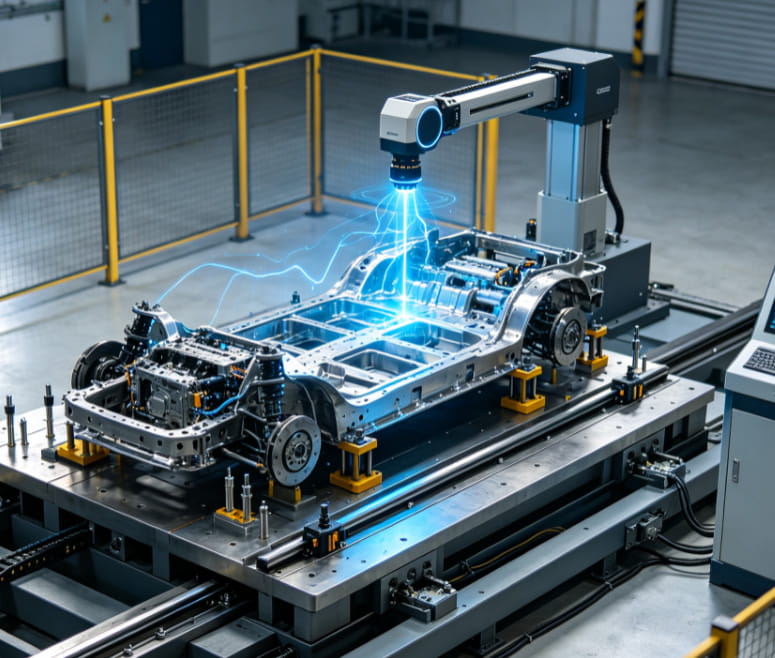
Integrated workstations deliver particularly prominent advantages for small-size products including miniature automotive stampings, hardware sealing housings and plastic-metal composite parts. A dual-station integrated solution is available for large body structural components: one station runs machining while the other handles manual loading and unloading, eliminating equipment idle time and further boosting hourly output. All-in-one integrated safety protection is adopted for the whole machine, with unified outer safety doors and safety light curtains. The unified protective structure is more streamlined than scattered guards on three separate machines and eliminates blind safety zones from multiple independent units.
Against the backdrop of surging factory expansion costs, custom multi-process integrated workstations deliver three core strengths: space optimization, process consolidation and manpower reduction. They satisfy capacity expansion demands of small and medium manufacturers without large-scale factory renovation, emerging as the optimal solution for intelligent production line upgrades within limited workshop floor space.