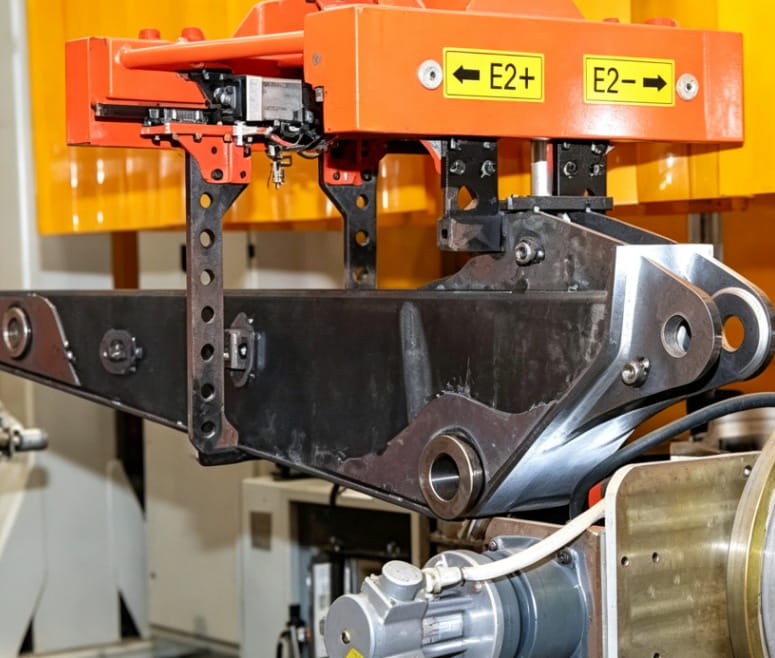
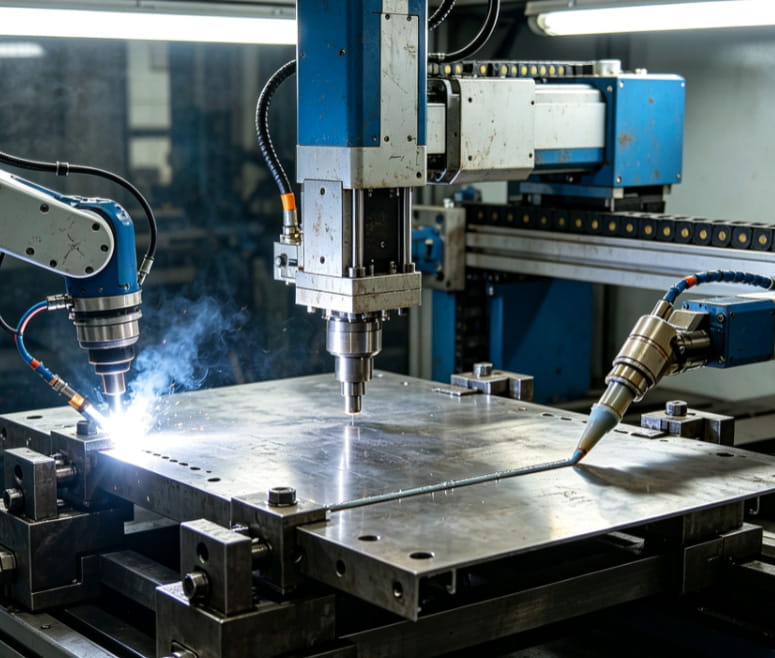
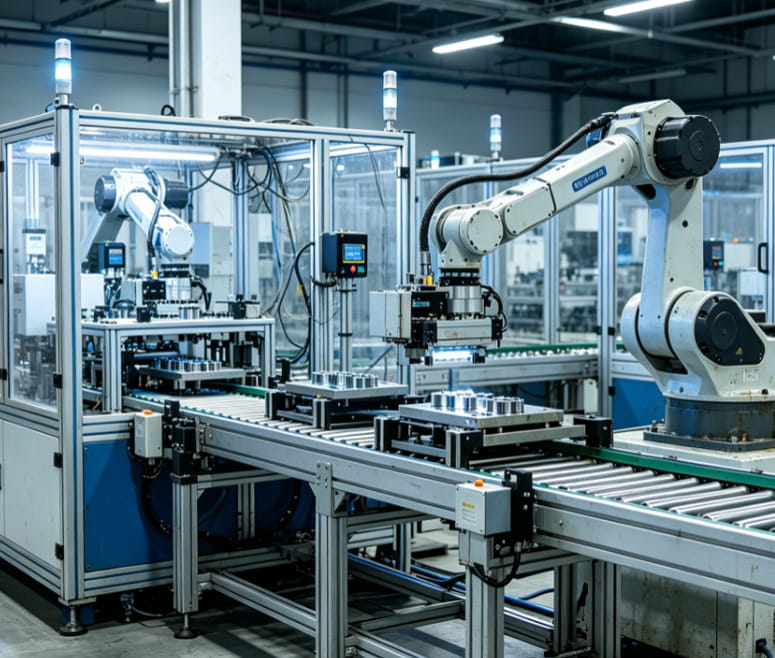
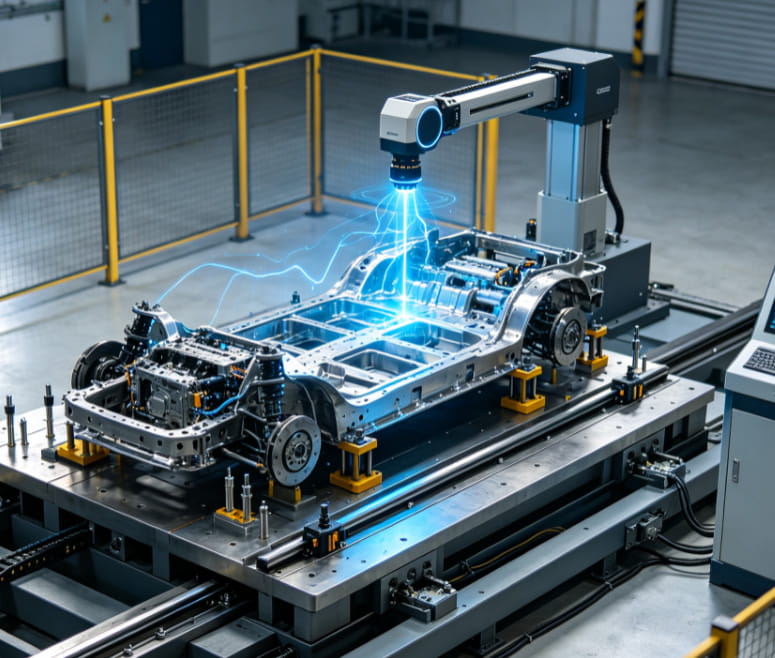
Tooling and fixtures serve as the core bearing components of custom welding, punching and gluing equipment. Conventional integrated tooling only fits a single workpiece model. When enterprises expand product lines, they have to manufacture an entirely new set of tooling, which extends the launch cycle of new products and raises supporting equipment investment. Adopting a split structural design, modular flexible tooling allows separate disassembly and replacement of locating blocks, support seats, clamping cylinders and locating pins. One single tooling base can be matched with multiple sets of positioning assemblies to cover machining demands of multiple workpieces with similar profiles, greatly improving equipment reusability and catering to the prevailing multi-variety, small-batch production model.
The base of flexible tooling is machined from high-strength low-deformation castings with unified standard reference holes. All positioning accessories adopt universal mounting interfaces. When switching workpiece models, the base does not need disassembly; only the corresponding positioning supports and clamping assemblies require replacement to complete changeover commissioning. Positioning parts are individually machined according to the 3D contour of workpieces and available in two material types: rigid metal supports and soft polyurethane clamping blocks. Metal locating blocks are used for sheet metal punching and welding processes, maintaining stable shape under stamping force and welding high temperatures. Soft clamping blocks are designed for gluing processes of plastic interior trims, preventing scratches on surface coatings during clamping while balancing reliable positioning accuracy and surface protection.
Dual driving options of pneumatic and electric systems are available for the tooling clamping mechanism. Operators only need one-click control to clamp and release workpieces, replacing traditional manual bolt tightening and significantly cutting loading/unloading time per piece. Multi-station combined flexible tooling can hold two workpieces simultaneously: one undergoes machining while the other is manually loaded and unloaded, eliminating equipment idle time and balancing overall production tact time. For special-shaped curved workpieces, the tooling is equipped with adjustable support fulcrums whose height and position can be fine-tuned vertically and horizontally to fit workpieces of various curvatures and prevent vibration and displacement during machining.
From production operation and maintenance perspective, modular design drastically cuts tooling maintenance costs. Once partial wear occurs on integrated one-piece tooling, the whole fixture has to be scrapped. For flexible modular tooling, only worn locating pins and clamping blocks need replacement, while the base, cylinders and pipelines can be reused long-term. Standardized universal accessories reduce inventory pressure of dedicated custom spare parts. Inspection reference points are reserved on the tooling datum surface, enabling fast accuracy verification with standard measuring tools during daily production. Deviated assemblies can be adjusted timely to sustain stable clamping precision over long service life.
In automotive component machining scenarios, small chassis parts, door stampings and plastic interior fittings can share the same integrated equipment base, with different flexible tooling sets to complete full-process welding, punching and gluing operations. During prototype trial production of new products, simple positioning modules can be rapidly fabricated for process verification without full tooling development investment, shortening the R&D cycle of samples. The modular flexible tooling design addresses three core demands: production efficiency, changeover cost and long-term maintenance. As an important supporting solution for cost reduction and efficiency improvement of custom automation equipment, it is widely adopted in customized production sectors including automotive supporting parts, precision hardware and plastic processing.