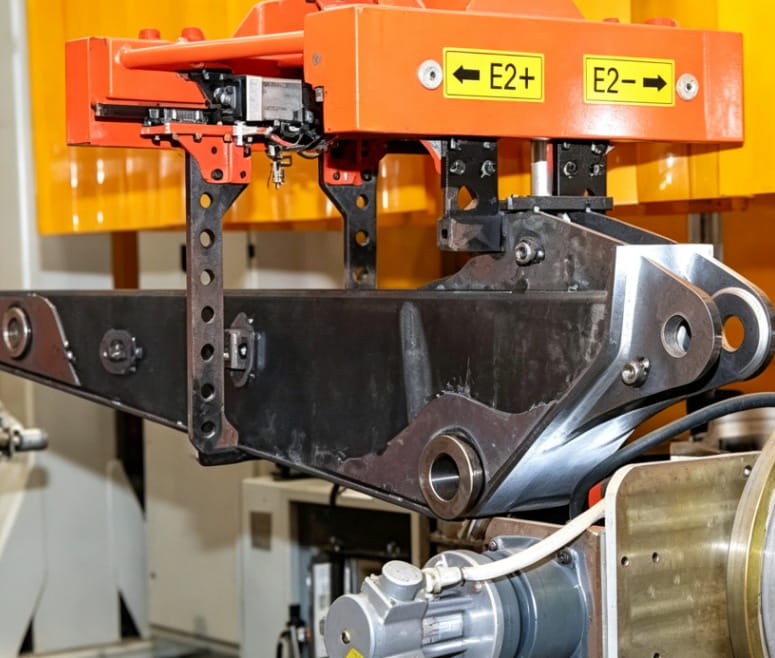
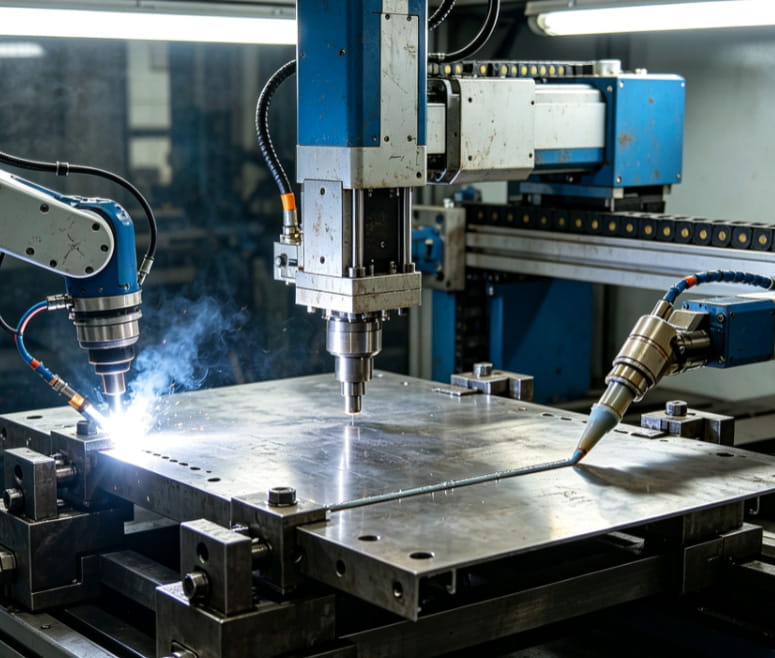
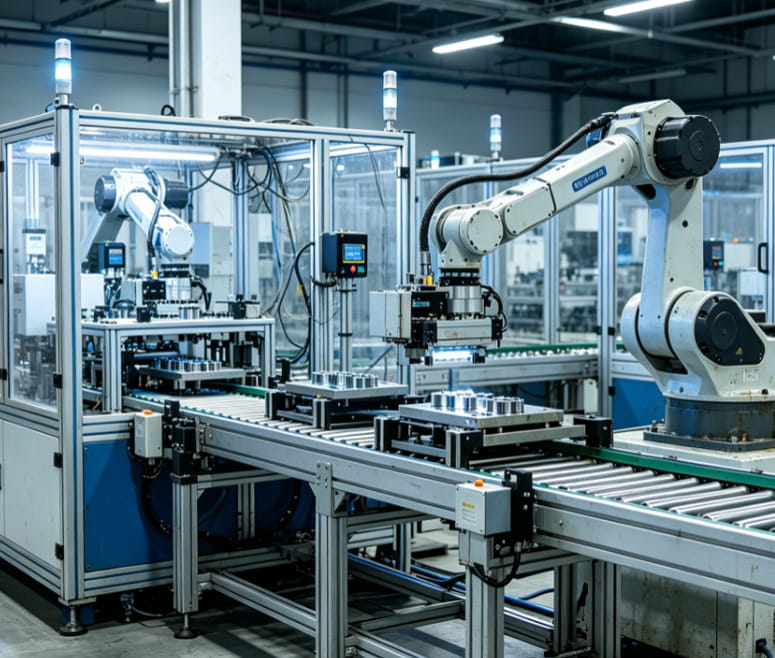
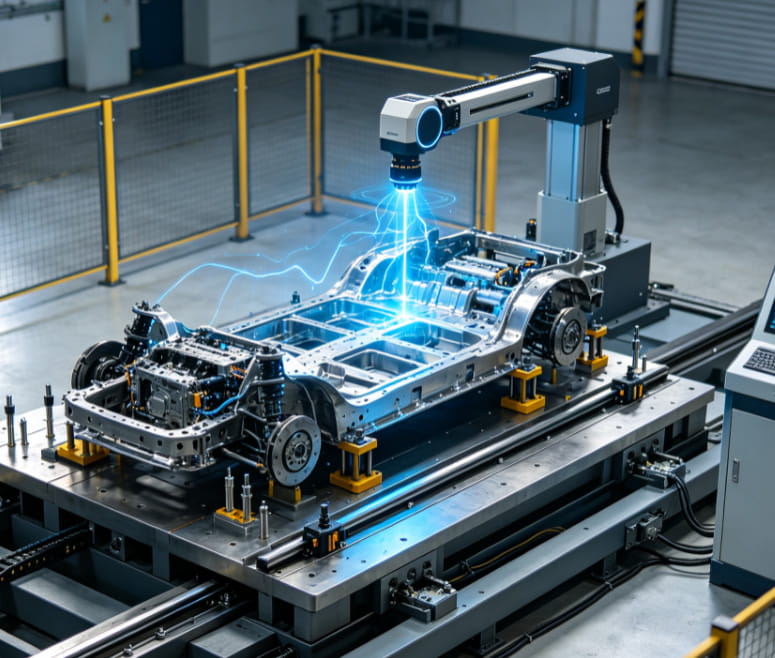
In traditional operations, operational data of custom welding, punching and gluing equipment are logged manually on paper. Statistics such as production output, equipment faults, process parameters and defective part counts suffer severe time lag, making real-time workshop status monitoring impossible. Digital data acquisition modules connect to the control systems of custom automated machinery to automatically capture full-dimensional production and operational data, which is synchronously uploaded to workshop visual management terminals. This creates a real-time, traceable and analyzable digital production system to support lean manufacturing management for enterprises.
The data acquisition unit connects with equipment PLCs via communication protocols, requiring no modifications to the machine’s mechanical structure. It automatically captures a full range of core data: daily total workpiece output, piece count per product model, equipment running & standby idle duration, all types of fault alarm logs, punching stamping parameters, welding power and travel speed, glue dispensing flow, and defective part quantities from visual inspection. Data is automatically categorized and stored by hour, shift and date for permanent retention and on-demand access, replacing manual paper logbooks and eliminating omissions and entry errors caused by human recording.
Workshop visual display screens show real-time equipment online status, instant output, daily yield rate and abnormal downtime. Managers can clearly grasp the operating status of the entire production line without patrolling each workstation. In cases of prolonged equipment standby or frequent defect alarms, technicians can be dispatched for troubleshooting immediately to cut idle downtime and stabilize throughput. Collected data can be exported into standardized reports that automatically calculate monthly output, defect rate and overall equipment efficiency (OEE), serving as the basis for production schedule adjustment, process optimization and equipment operation & maintenance analysis.
For welding processes, the system records welding power, travel speed and weld seam length for every single workpiece. It enables traceback of welding parameters for defective parts to analyze root causes of cold solder joints and weld burn-through. For punching processes, stamping force and hole coordinate deviation data are stored to identify dimensional variation patterns caused by sheet thickness changes and tooling wear. For gluing processes, adhesive consumption, mixing ratios and frequency of glue breakage/overflow anomalies are logged to optimize glue usage and cut raw material waste. All data is bound to unique workpiece serial numbers to realize full-process data traceability for individual products, meeting trace audit requirements of auto manufacturers for outgoing components.
The data acquisition module supports digital retrofitting of automotive checking fixtures. After electronic dial gauges are installed, fixture measurement readings are uploaded to the system automatically without manual transcription. Mass inspection data is aggregated instantly to map the distribution range of out-of-tolerance component dimensions, which in turn guides parameter optimization for upstream welding, punching and gluing equipment. This forms a complete digital closed loop: Machining – Inspection – Data Analysis – Process Adjustment.
The full acquisition system features lightweight deployment. Legacy custom equipment can be retrofitted later without complete machine replacement, keeping capital investment under control. Data can be viewed synchronously across multiple terminals; production reports can be accessed remotely via office PCs and mobile devices, allowing managers to track real-time production progress off-site.
Amid the digital transformation trend in manufacturing, data acquisition for custom equipment unlocks underlying production information. Data-driven process improvement, output control and equipment maintenance continuously reduce production waste and elevate overall workshop management efficiency.